Market E Pluribus Unum coin value depends on factors that the inscription cannot control.
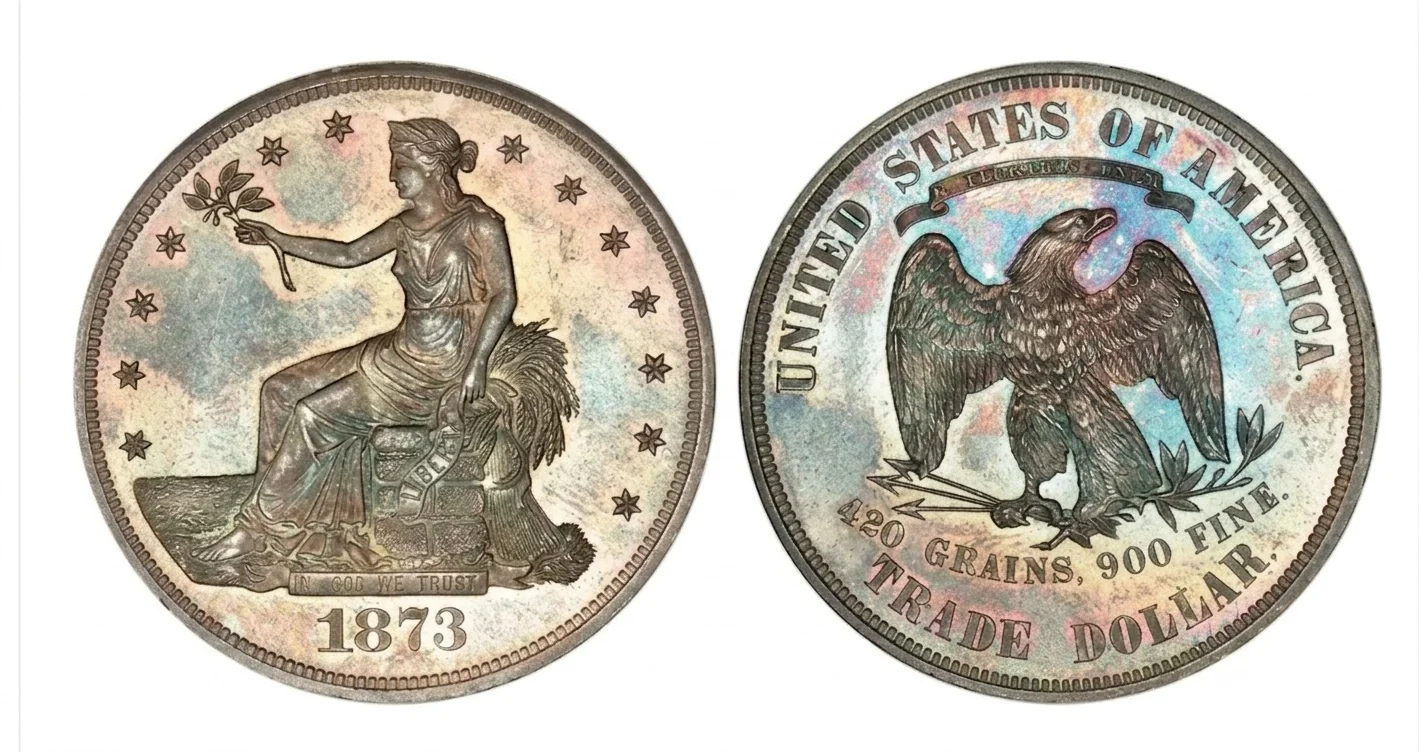
Production Period | Coin Denomination | Metal Type | Mass in Grams | Diameter in mm |
1795–1804 | 5 Dollars | Gold | 8.75 | 25.0 |
1807–1834 | 5 Dollars | Gold | 8.75 | 23.8 |
1840–1866 | 1 Dollar | Silver | 26.73 | 38.1 |
1878–1904 | 1 Dollar | Silver | 26.73 | 38.1 |
Adjusting the gold coin diameter in 1807 required redesigning the motto layout.
Engineers reduced letter height to prevent rapid die failure.
Leaving the motto off coins between 1834 and 1866 simplified the overall design.
Pricing Dynamics of Morgan Silver Dollars
Morgan dollars showcase a classic font style using sharp serifs.
Technical condition of the motto directly influences the grade on the Sheldon scale.
Type 1: 1878 Philadelphia
Eight feathers on the eagle tail
Price for MS65: $1,200
Annual price growth: 4%
Type 2: 1889 Carson City
Rare mint mark location
Price for MS63: $32,000
Annual price growth: 9%
Type 3: 1893 San Francisco
Lowest mintage figure
Price for MS65: $750,000
Annual price growth: 12%
Evaluation processes include checking the sharpness of every Latin letter.
Weak strikes in the center of the reverse side reduce asset value by 20%.
Utilizing polished dies resulted in high-quality Proof coins.
Influence of Engraving on Market Liquidity
Motto placement changed according to the aesthetic choices of chief engravers.
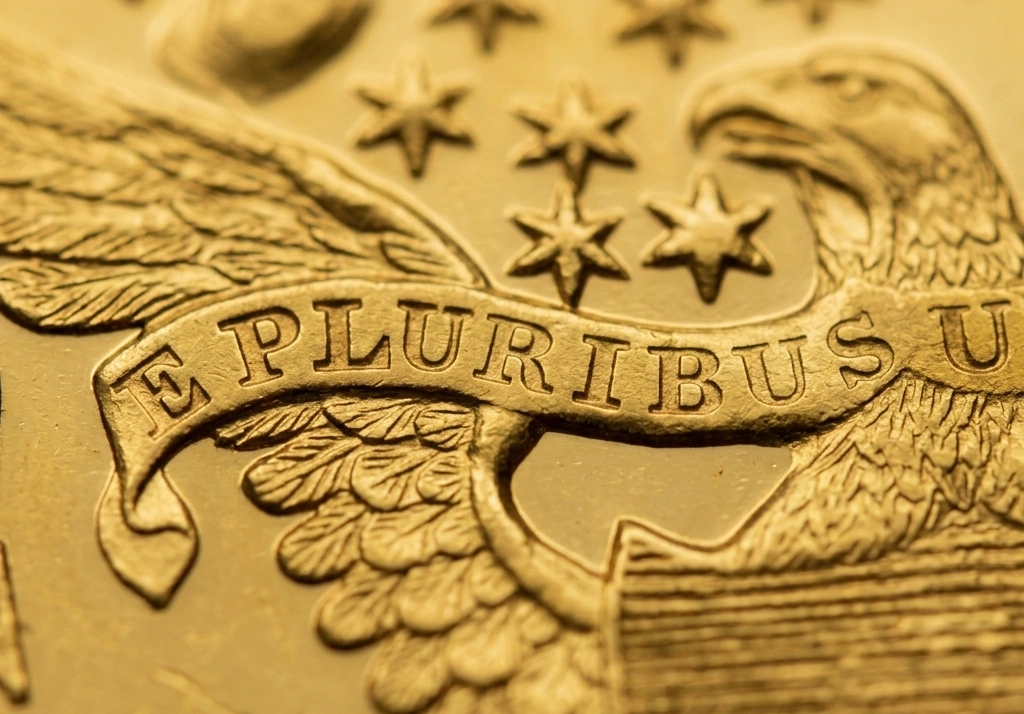
Robert Scot utilized a curved ribbon to hold the phrase.
→ Reason: filling empty space above the heraldic shield. → Result: increased wear on the raised parts of the letters.
George Morgan integrated the text into the upper curve near the edge.
→ Reason: creating space for a detailed eagle illustration. → Result: improved motto preservation during circulation.
Heritage Auction statistics for 2025 show a correlation between relief height and price.
High relief 1907 issues sell for $60,000 at MS65 preservation.
Similar coins featuring low relief sell for $3,500.
Technical Parameters and Price Records for Gold Coins
Gold denominations represent the highest interest for large investors.
Metal content parameters have remained consistent since 1837.
Coin Type | Year | Price at MS67 Grade | 5-Year Price Change |
Capped Bust $5 | 1822 | $8,400,000 | +15% |
Liberty Head $20 | 1866 | $45,000 | +7% |
Saint-Gaudens $20 | 1933 | $18,900,000 | +20% |
Indian Head $10 | 1907 | $150,000 | +8% |
Specimens from 1822 rank among the rarest items globally.
Existing in only three known copies ensures a lack of price drops.
Metal mass in these specific items equals 8.75 grams.
Adding copper to the mix improves the durability of small font details.
Analysis of Minting Errors and Text Defects
Disrupting the production cycle creates unique numismatic objects.
Die shifts result in the partial absence of motto letters.
Double Die
Letters overlapping each other
Price for 1955 Lincoln Cent: $2,500
Annual growth: 5%
Missing Edge Inscription
Specific to 1907 Saint-Gaudens coins
Price: $400,000
Annual growth: 10%
Filled Die Grease filling the letter cavities
Price reduction: 30% from base value
Mint inspectors rejected defective units during quality checks via a coin value checker app.
Entering circulation increases the significance of an error tenfold.
Verifying authenticity requires a light-based analysis of the metal alloy.
Role of the Motto in Modern Investment Programs
Modern coins facilitate the accumulation of physical gold and silver.
Designs often copy historical models from the nineteenth century.
American Silver Eagle Mass: 31.10 grams
Price: $42
Silver purity: 99.9%
American Gold Eagle Mass: 33.93 grams
Price: $2,550
Gold purity: 91.67%
American Platinum Eagle Mass: 31.12 grams
Price: $1,150
Platinum purity: 99.95%
Investment coins maintain the status of legal tender.
Face value differs from the market price of the precious metal.
Including the motto became mandatory for all legal issues in 1873.
Financial Dynamics of Rare Denominations
Rare denominations show resilience against inflationary pressures.
Two-cent pieces first received the motto in 1864.
1864 Small Motto Rare font variety
Price at MS65: $20,000
Volatility: Low
1864 Large Motto Common circulation issue
Price at MS65: $1,200
Volatility: Medium
1872 Two Cents Final year of mass production
Price at MS64: $2,800
Volatility: Low
Copper two-cent coin mass equals 6.22 grams.
Dropping copper prices does not lower the value of these assets.
Collector demand generates 95% of the final price.
Edge Lettering Factors
Placing the inscription on the coin edge protects against counterfeiting.
Saint-Gaudens gold edges feature text and raised stars.
Application Method | Edge Type | Coin Example | Forgery Difficulty |
Collar Minting | Lettered Edge | $20 Saint-Gaudens | High |
Rolling | Reeded Edge | $1 Morgan Dollar | Medium |
Smooth Strike | Plain Edge | 1 Cent Lincoln | Low |
Damaging the edge lowers a coin grade by two steps.
Restoring the inscription mechanically constitutes a fraud.
Laboratory tests reveal traces of soldering or carving on the rim.
Price Trends for Proof Quality Coins
Mirror-like surfaces highlight the frosted motto details, and you can see it via a scan coins for value app.
Double-strike technology provides the highest possible detail.
1950 Proof Set Price: $800
Annual increase: 3%
1936 Proof Set Price: $7,500
Annual increase: 6%
1895 Morgan Dollar Proof Price: $150,000
Annual increase: 11%
Lacking silver dollars for circulation in 1895 boosts the Proof status.
Minting only 880 units makes this position very scarce.
Every specimen carries an individual certificate of authenticity.
Metal Composition Analysis and Motto Longevity
Chemical stability of the alloy affects motto preservation in soil or water.
Silver coins made of 900 purity are subject to toning.
Even Toning
Protects letter details
Increases price by 10–15%
Black Corrosion
Destroys the metal surface, lowering the price by 50%
Chemical Cleaning
Removes original luster, lowering the price by 70%
Gold at 900 purity does not oxidize in natural environments.
Coins from shipwrecks maintain perfect font conditions.
Gold dollar mass equals 1.67 grams.
Specifics of Minting Small Denominations
Five-cent coins require deep relief for motto longevity.
Nickel alloys provide significant hardness.
1913 Liberty Head Nickel 5 known specimens
Price: $4,500,000
Mass: 5.00 grams
1918/7-D Buffalo Nickel Overdate error
Price at MS64: $120,000
Mass: 5.00 grams
1942 Silver Nickel Wartime issue
Price at MS66: $150
Mass: 5.00 grams
Changing the metal mix in 1942 did not change the coin weight.
Adding silver made striking small letters much easier.
Letter size on nickel coins measures 0.4 mm in height.